‘Unbind Me Now’: Eze uses fire as a unifying metaphor for truth, moral urgency, transformation


By Anayo Nkamnebe
UNBIND Me Now by James Ngwu Eze (Masobe Books, Lagos; 2026) is a compelling and ambitious collection that treats poetry not as ornament, but as witness. Across its carefully structured movements, Eze engages a world shaped by violence, political betrayal, racial injustice, and ecological grief, using fire as a unifying metaphor for truth, moral urgency, and transformation.
One of the collection’s most striking qualities is the clarity of its ethical stance. These poems do not aspire to neutrality. Whether addressing insecurity in Nigeria, the trauma of genocide, the brutalities of racism, or the degradation of the natural world, the poet writes from the conviction that silence in the face of suffering is itself a form of complicity. The voice that emerges is that of a citizen-witness—one who recognises that while poetry may not halt violence, it can refuse erasure and resist forgetting.
The opening sections are charged with protest and indignation. The poems function almost as alarms: insistent, uncompromising, and emotionally intense. As the collection unfolds, however, the fire becomes more inward. The latter poems dwell on memory, inheritance, identity, exile, and quiet endurance. Anger is not abandoned; rather, it matures into reflection, lending the book a discernible emotional architecture rather than the feel of a mere accumulation of protest pieces.
A notable strength of Unbind Me Now lies in its ability to bind the personal to the political. Individual loss, familial grief, communal trauma, and environmental devastation are presented as interconnected expressions of a deeper moral crisis. The suffering of people and the suffering of the land mirror each other, reinforcing the poet’s insistence that injustice is never abstract—it is always lived, embodied, and localised.
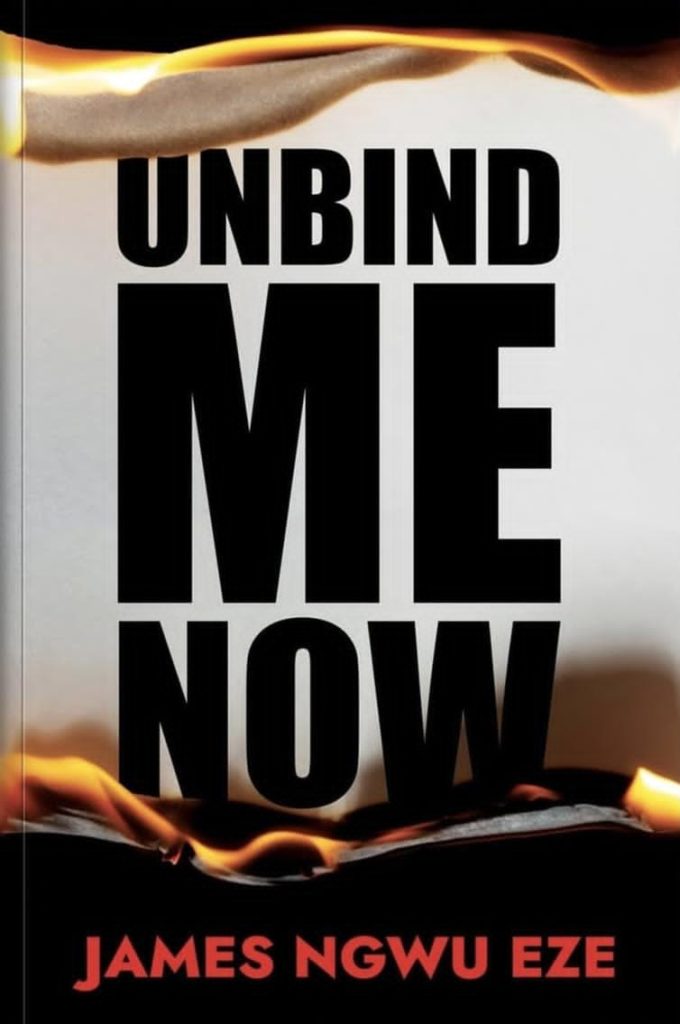
Stylistically, the collection is dense, lyrical, and image-driven, drawing confidently on African cosmology, Christian symbolism, and elemental forces such as fire, rain, wind, and earth. At moments, the intensity of metaphor can feel overwhelming, but this excess mirrors the magnitude of the realities being confronted. This is not a collection designed for casual consumption; it demands attentiveness, emotional openness, and moral engagement from its reader.
In the end, Unbind Me Now reads like a long vigil kept by firelight—sometimes blazing, sometimes reduced to embers, but never extinguished. It is the work of a poet who believes that language still matters when nations falter, when memory is threatened, and when the earth itself seems to grieve. One closes the book not consoled, but awakened—and that, perhaps, is the highest calling of poetry in our time.
* Prof. Nkamnebe of the Faculty of Management Sciences, Nnamdi Azikiwe University, Awka, Anambra State