‘Tell Ooni of Ife to return our 19 shrines’

By Taofeek Olatunbosun
LET it be said plainly and without politeness that the removal of the 19 ancestral shrines in Epe, Lagos State for the building of a refinary is an act of cultural vandalism and historical betrayal. Above all, it was done by someone who should be a custodian of the shrines.
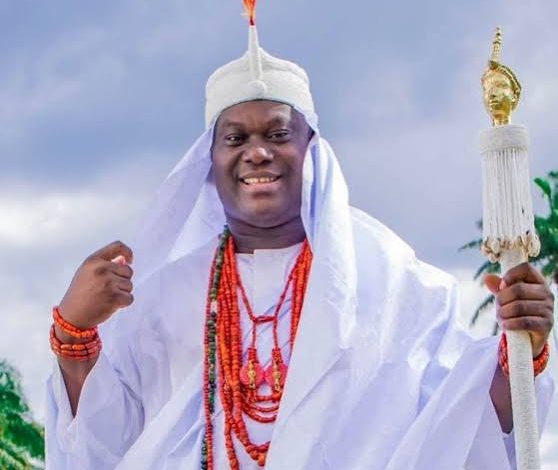
These shrines were not weeds to be cleared, nor refuse to be disposed. They were sacred inheritances left behind by our forefathers—anchors of memory, identity, and spirituality. Yet, in the name of a refinery and the worship of money, they were allegedly destroyed under the watch or influence of the Ooni of Ife.
And so we ask, loudly and without fear:
Is the Ooni of Ife still the custodian of Yoruba tradition, or has he become its undertaker?
Is he still the spiritual heir of Odùduwà, or mere a ceremonial titleholder auctioning our heritage to the highest bidder?
When Europeans desecrated African shrines, we called it colonial violence. Today, a deeper and more shameful violence has occurred. What the white man once did with guns and missionaries, our own elites now do with contracts and handshakes. This is not progress; it is betrayal.
Let it be said clearly: any king who presides over the destruction of ancestral shrines has no moral right to sit on traditional throne.
If shrines, graves, and sacred groves can be erased so easily, then tell us: what exactly is left of our ancestry?
What is tradition worth when its supposed guardians are the first to sell it?
Has the Ooni now embraced a faith or a worldview that requires him to uproot the spiritual foundations of the very throne he occupies?
And where is the Oba of Lagos?
EVEN more troubling is the silence of the Oba of Lagos. Epe is not in Ife. Lagos is not under the spiritual jurisdiction of Ile-Ife. So how does a monarch from another domain enter Epe to oversee or permit the removal of 19 shrines without the Oba of Lagos? What happened to the responsibility of the Oba of Lagos?
Lagosians deserve answers. Why was the Oba of Lagos unable—or unwilling—to protect the ancestral heritage of his people? Why were our shrines easier to sacrifice and profits to be protected?
Because when a king cannot protect the graves, shrines and sacred history of his people, then what exactly is he ruling over – trafic or real estate?
A bad son removes the graves of his mother
LET me strip this issue of all royal titles and philosophical gymnastics. A year ago, a friend of mine inherited a house his late mother built. Before her death, she made one clear request: that she be buried beside the house she laboured to build. Her family honoured her wish.
Years later, her son decided to sell the house. A buyer offered him ₦150 million—on one condition: the grave had to go. With the grave intact, the value dropped to ₦55 million.
My friend chose money over memory.
He exhumed his mother’s remains and reburied them in a cemetery elsewhere with the cost at ₦35,000. Her final wish meant nothing when profit came calling.
I opposed his action because it was simple: a bad son removes the grave of his mother!
Now tell us—honestly and without hypocrisy—what is the difference between that act and the removal of those 19 shrines?
There is none. No debate. No excuse.
Both are acts of greed. Both are betrayals of ancestry. Both trade honour for convenience and roots for revenue.
A people who uproot their ancestors will soon wander without direction. A society that sells its sacred past will have nothing left to defend in the future.
The shrines must be returned. Those responsible must answer. And the lie that money equals progress must be rejected.
What is the difference between the son who uprooted the remains of his mother and those who approved the removal of 19 shrines?
History is watching—and it does not forgive!
* Dr. Olatunbosun, writer, teacher and cultural worker, is the Chairman of Association of Nigerian Authors (ANA), Lagos Chapter